

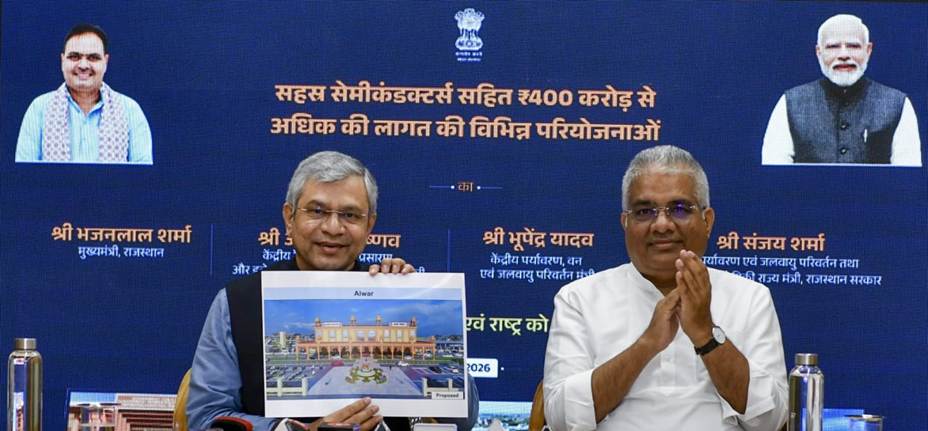
Indian Railways is transforming passenger experience in Rajasthan with large-scale redevelopment works under the Amrit Bharat Station Scheme. Union Minister for Railways Ashwini Vaishnaw announced that 15 redeveloped stations in the state, including Jaisalmer, Barmer, Bundi, Mandalgarh and Somesar, are now offering modern passenger amenities. A key highlight is the ongoing redevelopment of Alwar Railway Station at a cost of ₹112 crore. The station is being upgraded with two side entries, an additional platform, two six-meter-wide foot overbridges, nine lifts, improved parking facilities, and streamlined traffic circulation systems. Spread across nearly 16,000 square meters, the upgraded station will combine modern infrastructure with Rajasthan’s traditional architectural style.
The redevelopment plan also includes dedicated pick-up and drop-off zones, expanded parking over 4,500 square meters, and commercial spaces of around 1,900 square meters to enhance passenger convenience and boost local economic activity. Officials stated that the project will significantly improve mobility and strengthen Alwar’s role as a key transport hub on the Delhi–Jaipur route.
During the virtual event, Union Minister for Environment, Forest and Climate Change Bhupender Yadav and Rajasthan Chief Minister Bhajanlal Sharma also participated. They highlighted the importance of improved rail connectivity in supporting regional development, tourism, and industry.
Across Rajasthan, 85 stations are being redeveloped under the scheme, with 15 already completed. Stations such as Barmer, Jaisalmer, Dausa, Gangapur City and Khairthal are among those upgraded. Nationwide, 1,340 stations are being modernized under the programme.
Railway officials also reported major progress in infrastructure expansion, including new Vande Bharat Express services, Amrit Bharat Express trains, and increased rail connectivity across the state. Rajasthan has received significant investment, with thousands of kilometers of new tracks laid and multiple cargo terminals developed to strengthen freight movement.
The initiative aims to make railway stations modern, efficient, and passenger-friendly while preserving local cultural identity.
