

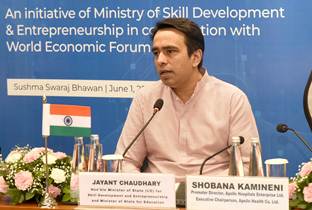
The Ministry of Skill Development and Entrepreneurship (MSDE), in partnership with the World Economic Forum (WEF), hosted the High-Level Roundtable of the India Skills Accelerator (ISA) in New Delhi under the theme, “From Insight to Action: Closing Skills Gaps for Growth.” The event brought together senior representatives from government, industry, academia, international organizations, and development partners to discuss strategies for addressing India’s evolving workforce needs.
Launched in January 2026 following Union Cabinet approval, the India Skills Accelerator is part of the World Economic Forum’s Global Accelerators Network and is hosted by MSDE. The initiative aims to strengthen collaboration between the public and private sectors to align skilling systems with changing labour market demands, promote innovative skills financing, and prepare the workforce for emerging sectors such as artificial intelligence, advanced manufacturing, supply chains, and the green economy.
The roundtable was co-chaired by Union Minister of State (Independent Charge) for Skill Development and Entrepreneurship Shri Jayant Chaudhary, Minister of State for Education Dr. Sukanta Majumdar, Apollo HealthCo Executive Chairperson Shobana Kamineni, and Bajaj Finserv Chairman and Managing Director Sanjiv Bajaj. World Economic Forum Managing Director Mirek Dušek also participated in the discussions.
Participants explored key trends shaping India’s labour market, identified priority interventions to bridge skills gaps, and discussed collaborative approaches to workforce transformation. Speakers emphasized the importance of integrating education, skilling, and employability to ensure that India’s youth are equipped with future-ready capabilities.
The meeting concluded with a collective commitment to advance workforce development through structured public-private partnerships. The outcomes will help shape the implementation roadmap of the India Skills Accelerator, supporting India’s ambition to become a leading global talent hub and strengthen its competitiveness in the future of work.
