

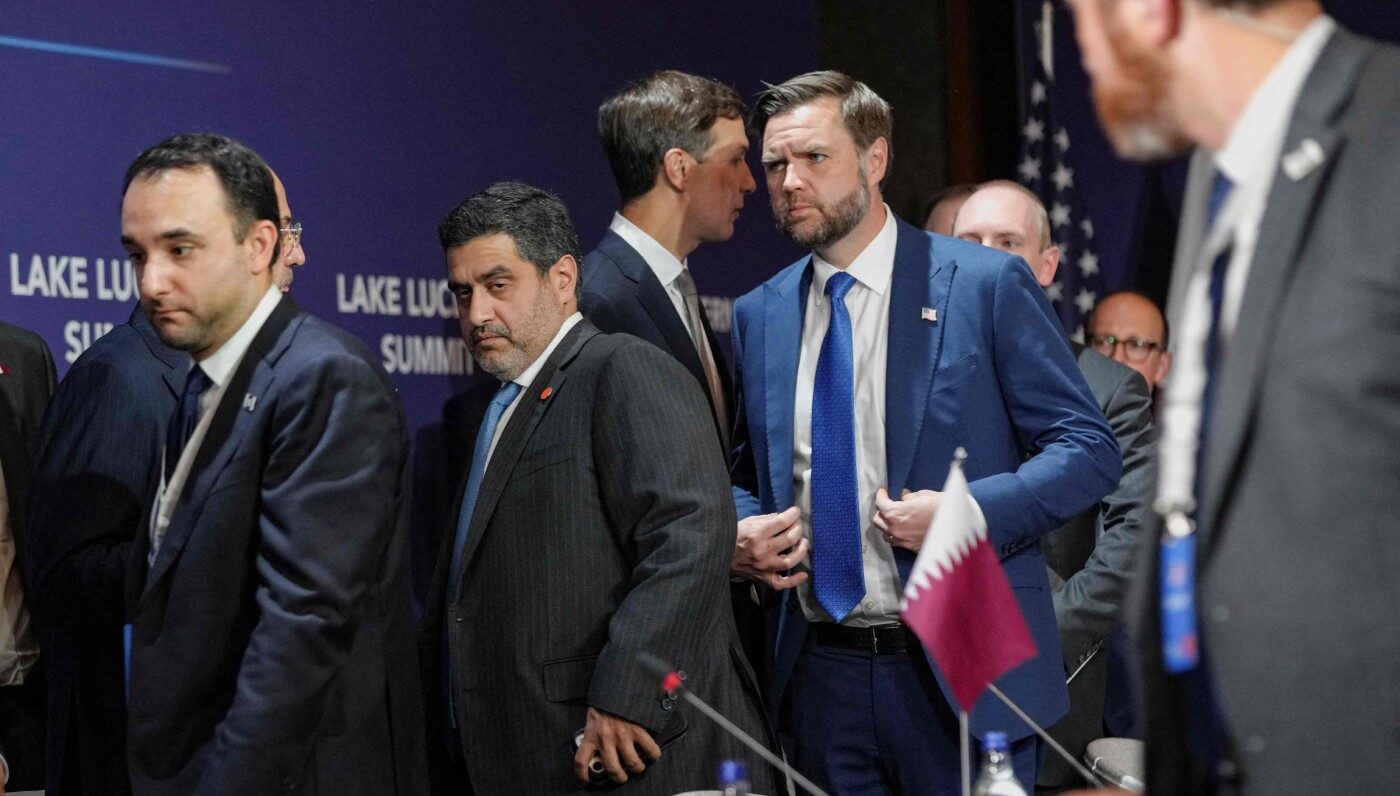
The United States and Iran made significant progress during their first high-level negotiations in Switzerland, agreeing on a framework aimed at securing a broader deal within 60 days despite a tense start that included a temporary walkout by the Iranian delegation.
The talks, held at the Lake Lucerne Summit in Switzerland, concluded with both sides agreeing to establish a High Level Committee that will oversee future negotiations and provide political direction. The committee will supervise working groups focused on nuclear issues, sanctions, monitoring mechanisms and dispute resolution.
Negotiations initially faced difficulties after Iranian representatives briefly left the talks in protest over remarks made by U.S. President Donald Trump. Iranian state media described the comments as offensive, leading to a pause in discussions. However, mediation efforts by Qatar and Pakistan helped bring both sides back to the negotiating table, allowing talks to continue into the early hours of Monday.
A joint statement issued by Qatar and Pakistan described the discussions as “positive and constructive,” highlighting encouraging progress on several critical issues. Among the key outcomes was a roadmap designed to achieve a final agreement within 60 days, with technical-level discussions set to continue throughout the week.
The two countries also agreed to establish a direct communication mechanism to prevent misunderstandings and ensure the safe passage of commercial vessels through the Strait of Hormuz, a strategic waterway crucial to global energy supplies.
Another major breakthrough was the creation of a de-confliction cell involving the United States, Iran and Lebanon. The mechanism aims to support the implementation of ceasefire arrangements and reduce the risk of renewed military escalation in Lebanon.
Iranian Foreign Minister Abbas Araghchi praised the mediation efforts of Qatar and Pakistan, stating that meaningful progress had been achieved. He said the discussions had resulted in waivers for Iranian oil and petrochemical exports, the easing of certain restrictions, the release of some frozen assets and plans for reconstruction and economic development.
The talks mark the most significant diplomatic engagement between Washington and Tehran in recent months and could pave the way for broader regional stability if future negotiations remain on track.
