

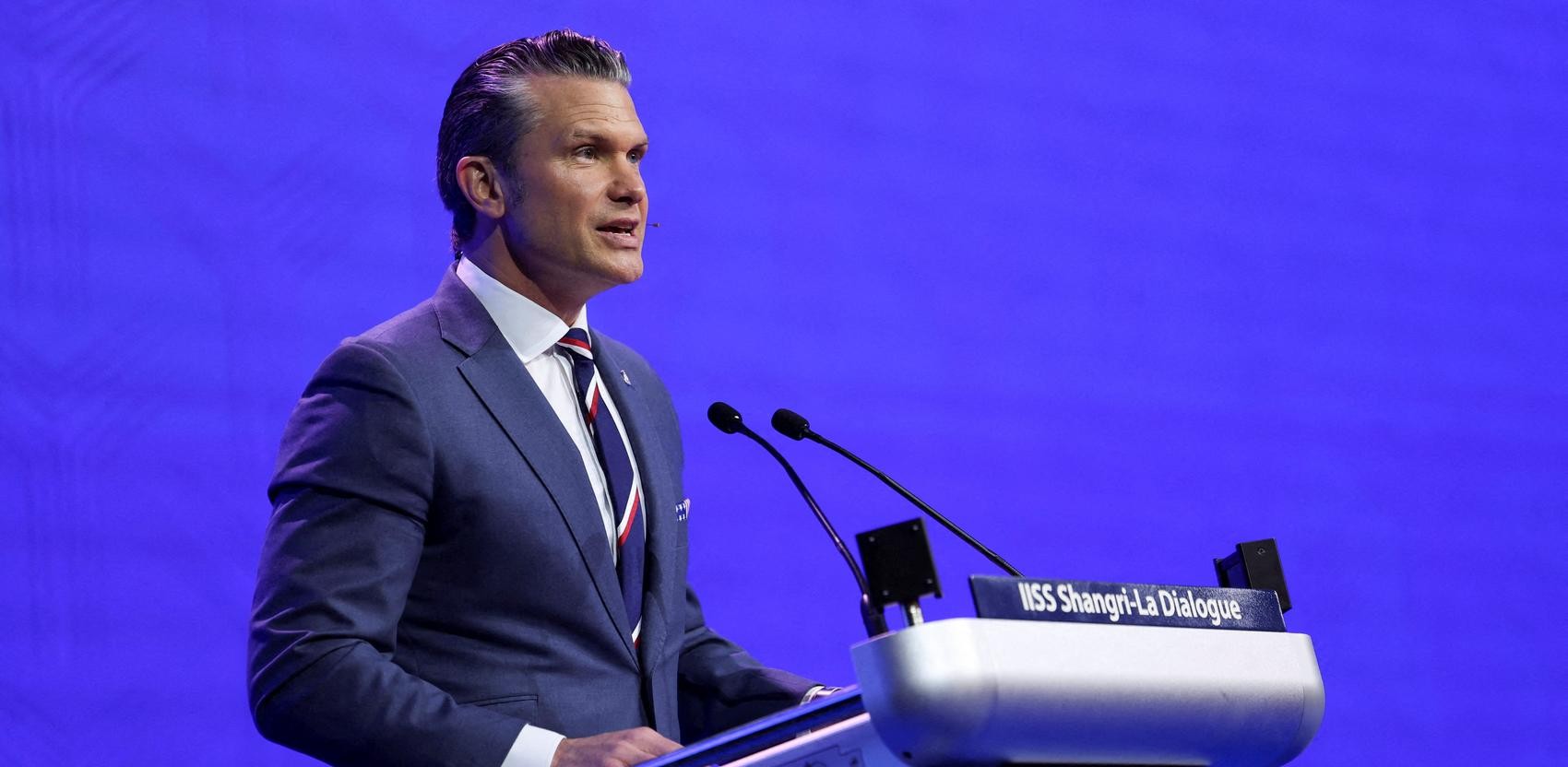
U.S. Defense Secretary Pete Hegseth has urged Asian allies to increase their defense spending and strengthen regional security cooperation in response to China’s growing military capabilities. Speaking at the Shangri-La Dialogue in Singapore, Asia’s leading defense and security forum, Hegseth described China’s military expansion as a source of “rightful alarm” and warned against any single power dominating the Indo-Pacific region.
Hegseth said the United States is committed to maintaining a stable balance of power and believes a stronger, more self-reliant network of allies is essential to deter aggression and preserve regional security. He noted that Washington expects its Asian partners to raise defense spending to around 3.5% of GDP while the U.S. continues its own substantial military investments.
Emphasizing burden-sharing among allies, Hegseth echoed President Donald Trump’s position that wealthy nations should contribute more to their own defense. He stated that the era of relying heavily on U.S. security support is ending, stressing that strong alliances require equal commitment from all partners.
On U.S.-China relations, Hegseth adopted a measured tone, saying communication between the two countries has improved and military-to-military contacts have become more frequent. He suggested that open lines of communication are helping manage tensions despite ongoing strategic competition.
The Pentagon chief also addressed developments in West Asia, stating that the United States remains prepared to resume military action against Iran if diplomatic efforts fail to prevent Tehran from acquiring nuclear weapons. However, he emphasized that the Trump administration continues to pursue a diplomatic solution.
Regarding Taiwan, Hegseth said any future U.S. arms sales decisions would ultimately rest with President Trump. Taiwan is reportedly awaiting approval for a major defense package, but Hegseth indicated that Washington’s longstanding approach toward the island remains unchanged.
His remarks highlight the United States’ focus on strengthening regional alliances while balancing strategic competition with China and managing security challenges in multiple regions simultaneously.
