

(HT)
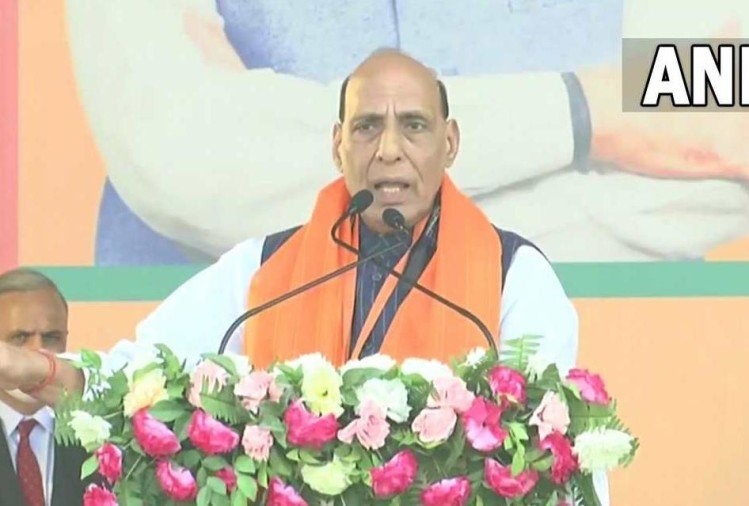
Defence minister Rajnath Singh on Friday urged the International Monetary Fund (IMF) to reconsider its $1 billion financial assistance to Pakistan and stop future support, saying that Islamabad was again trying to rebuild the terror infrastructure taken down by New Delhi and adding that such aid will be used for funding terrorism.
He questioned if the bailout to Pakistan was tantamount to indirect funding of terror by the global organisation in what was New Delhi’s latest push to isolate Islamabad globally.
Singh also warned Islamabad that it was currently “on probation” under the May 10 understanding that ended four days of fierce fighting. “If the behaviour improves, it is fine; but if there is any disturbance, harshest punishment will be given,” he said. “Our actions were just a trailer, we will show the full picture, if need be. Attacking and eliminating terrorism is the new normal of new India,” he said.
Operation Sindoor, which began in the early hours of May 7, was New Delhi’s response to the Pahalgam terror attack that killed 26 people.
“Any financial assistance to Pakistan is no less than terror funding,” Singh said while addressing Indian Air Force (IAF) personnel at the Bhuj airbase in Gujarat; a Jaguar fighter jet and Pechora surface-to-air missiles forming the backdrop.
Bhuj was among the airbases that Pakistan attempted to attack during the four-day military confrontation that stoked fears of a full-blown shooting war. This was Singh’s second visit to a military base in two days.
“Pakistan is once again trying to rebuild the terror infrastructure that was destroyed,” he said. “A large chunk of the IMF bailout to Pakistan will be used to fund the terror infrastructure. Will this not be considered indirect funding by IMF, an international organisation? The funds India gives to IMF should not be used, directly or indirectly, to create terror infrastructure in Pakistan.”
His comments came a day after he questioned if nuclear weapons were safe in Pakistan’s control and custody, and demanded Islamabad’s arsenal be placed under the supervision of global nuclear watchdog International Atomic Energy Agency (IAEA), calling the country “irresponsible and rogue”.
The defence minister saidPakistan will spend taxes collected from its citizens to give ₹14 crore to UN-designated terrorist Masood Azhar, the head of Jaish-e-Mohammed terror outfit, referring to the compensation announced by Islamabad for the families of those killed in the Indian strikes on terrors camps in Pakistan.
Indian forces launched operation Sindoor in the early hours of May 7, bombing nine terror camps in Pakistan and Pakistan-occupied Kashmir (PoK). The pre-dawn strikes –– in which at least 100 terrorists were killed –– sparked a series of attacks and counterattacks across the western border, involving fighter jets, missiles, armed drones, and fierce artillery and rocket duels.
In one such counterattack on the night of May 9-10, the IAF struck targets at 13 Pakistani airbases and military installations.
The understanding between India and Pakistan to cease military hostilities was announced on May 10 evening, after Indian director general of military operations Lieutenant General Rajiv Ghai and his Pakistani counterpart Major General Kashif Abdullah talked over the hotline and agreed to stop all military actions against each other — on land, in the air and sea.
Singh hailed the role of Indian forces and locally produced weapons during the clash; the Indian strikes marked the worst hit that Pakistan took after the 1971 war.
“When missiles were dropped inside the enemy territory, the world heard the echoes of India’s valour and might,” Singh said, adding that India showed that its fighter jets can strike “every corner of Pakistan without crossing the border.”
The IAF jammed Pakistan’s Chinese-supplied air defence (AD) systems to launch the precision strikes on terror and military targets in Pakistan.
“The world has witnessed how IAF destroyed terror camps and later Pakistan’s airbases. IAF gave the proof that India’s war policy and technology have changed,” Singh said.
