

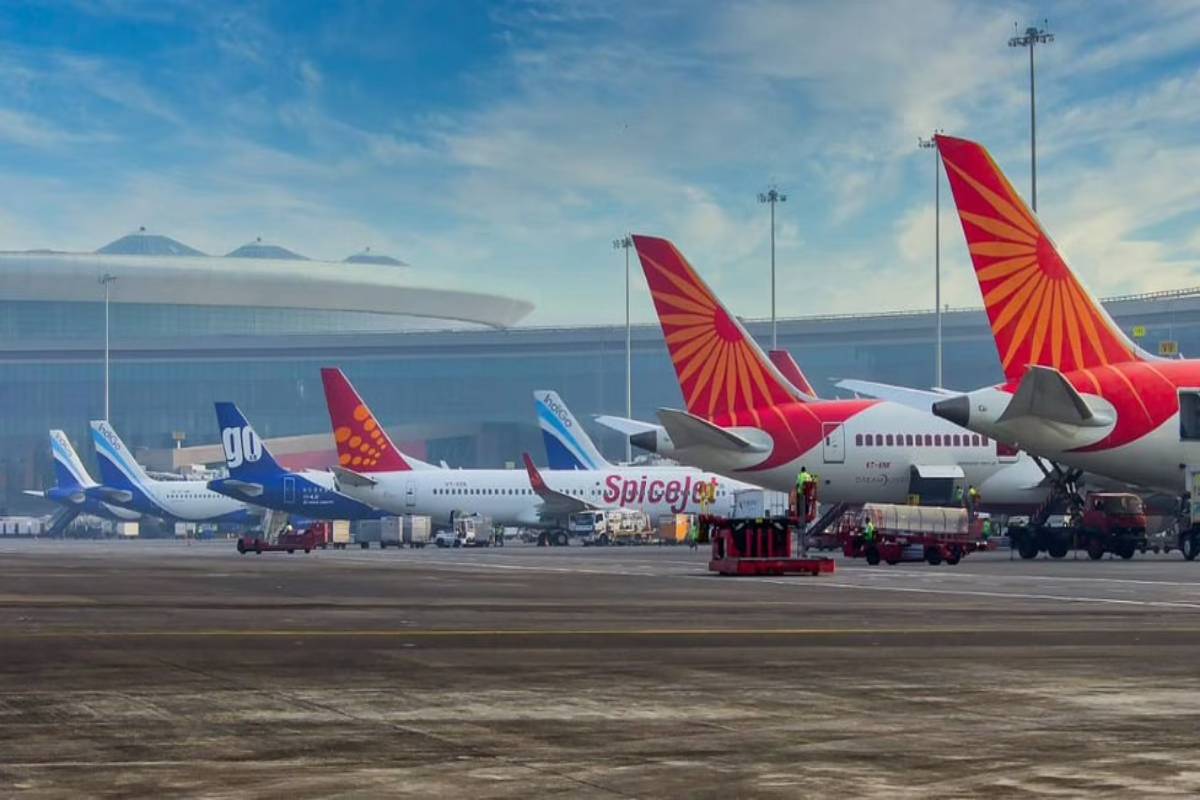
(HT)
The government has begun preparations for one of Delhi airport’s four runways to be shut again in mid-June and has instructed airlines to plan flight cancellations, officials said quoting civil aviation minister Ram Mohan Naidu’s discussion with airlines on Tuesday.
Runway 28/10 of the Capital’s IGI Airport needs to be shut for its landing instruments to be upgraded. The first attempt to do this in April had to be aborted within four weeks after flight schedules descended into chaos, with the airport unable to handle its typical load of roughly 1,400 flights a day on three of its runways.
A second attempt will be made beginning June 15, which will last 90 days. The period identified by officials as relatively leaner than at present when many are expected to fly in and out of the city for vacations.
“Civil aviation minister Ram Mohan Naidu called a meeting with airlines on Tuesday morning and instructed them to start preparing for the runway closure, which is expected to last for around three months,” said an official aware of the matter.
The minister has taken a proactive approach to avoid repeating the chaos that ensued in April. “The minister also asked the airlines to plan flight cancellations in advance to minimise inconvenience to passengers,” said a second official aware of the matter.
“He (Naidu) further asked the airlines to propose all possible measures that could be taken to minimize the impact of the runway closure on passengers,” the official added.
The high-level meeting was held at the ministry of civil aviation with comprehensive stakeholder participation, including representatives from all Indian airlines, Airports Authority of India (AAI), aviation secretary Samir Kumar Sinha, Faiz Ahmed Kidwai, the director general of Directorate General of Civil Aviation (DGCA), and Videh Kumar Jaipuriar, chief executive officer of Delhi International Airport Ltd.
The renewed focus on advance planning comes after a chaotic episode in April when Delhi airport authorities shut runway 28/10 on April 8 to upgrade its Instrument Landing System (ILS) to CAT III B standards — an enhancement aimed at enabling operations during low-visibility conditions common in Delhi’s foggy winters. The runway’s lighting system also needed to be extended from 650 to 900 metres.
However, by April 11, the airport began experiencing significant flight delays, attributed to poor planning among stakeholders, including a lack of any mandate for airlines to mandatorily reduce services. The situation was made worse by spells of thunderstorms.
The crisis exposed critical gaps in India’s aviation ecosystem, particularly the absence of a regulatory mechanism that can enforce necessary adjustments during planned infrastructure work at critical hubs. Despite being informed well in advance about the runway closure, airlines had not reduced their flight operations—a crucial step that could have potentially mitigated the chaos.
