

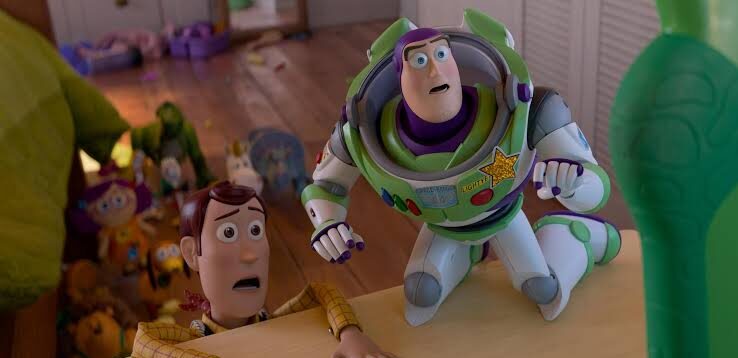
Toy Story 5 arrives with a familiar question hanging over it: did Pixar really need another sequel? After the emotional farewell of Toy Story 3 and Woody’s touching send-off in Toy Story 4, many believed the franchise had already reached a perfect conclusion. Surprisingly, the fifth installment proves there is still meaningful ground left to explore.
Directed by Andrew Stanton and co-written by McKenna Harris, Toy Story 5 tackles a highly relevant theme—the growing role of technology in childhood. Bonnie, now older and struggling to connect with her peers, receives a frog-shaped tablet called Lilypad, a device designed to help children socialize through digital interactions. As Bonnie becomes increasingly attached to the gadget, her beloved toys fear they are being replaced.
What makes the film stand out is its balanced approach to the topic. Rather than portraying technology as the enemy, Pixar presents a thoughtful discussion about how children build relationships and engage with the world. Lilypad, voiced by Greta Lee, genuinely wants to help Bonnie, but its algorithm-driven understanding of friendship clashes with the emotional depth and creativity fostered by real-world play.
The emotional heart of the story belongs to Jessie. Joan Cusack’s energetic cowgirl steps into the spotlight as the film’s central character, confronting old fears of abandonment while trying to reconnect Bonnie with imaginative play. Her journey gives the movie much of its warmth and emotional weight.
Woody’s return adds familiarity and wisdom, while Buzz Lightyear delivers some of the film’s biggest laughs through a wildly entertaining subplot involving a stranded group of futuristic Buzz toys. New characters, including Conan O’Brien’s hilarious Smarty Pants, also leave a strong impression.
Visually, the film is stunning, showcasing Pixar’s most advanced animation to date. While some longtime characters receive limited screen time, Toy Story 5 succeeds because it embraces change while celebrating imagination, empathy and genuine human connection. It is a heartfelt sequel that feels both timely and surprisingly necessary.
