

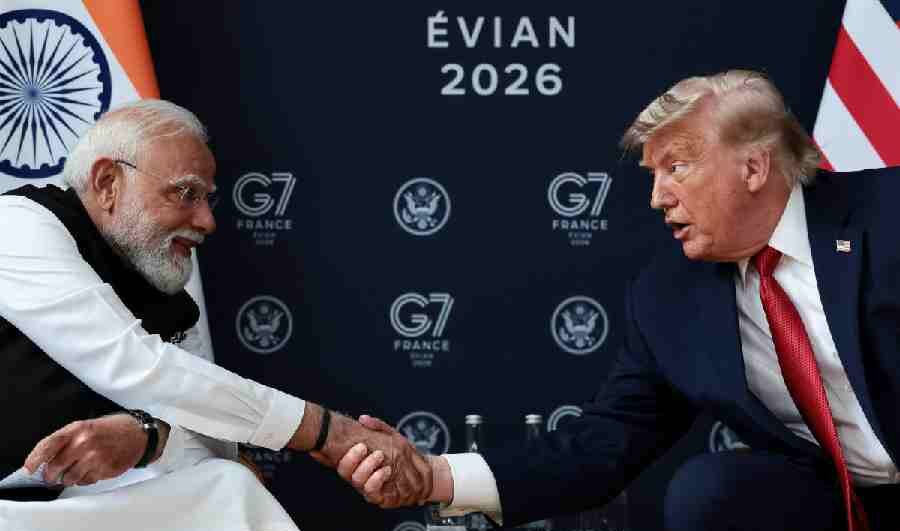
Prime Minister Narendra Modi’s meeting with US President Donald Trump on the sidelines of the G7 Summit in Evian, France, has reignited debate over the nature of India-US relations and the importance of maintaining mutual respect in the partnership.
The meeting took place under difficult circumstances. Just days earlier, American military actions reportedly struck multiple vessels carrying Indian sailors, resulting in the deaths of three Indian nationals. Despite the seriousness of the incident, there was no public indication that the United States offered an apology or formally expressed regret. During his discussions, Modi emphasized broader principles such as the protection of maritime traffic and the safety of seafarers, but avoided direct public confrontation.
The episode contrasts with Modi’s stance a year earlier, when he firmly rejected Trump’s claim that the United States had mediated a ceasefire between India and Pakistan. That response was widely seen as a clear assertion of India’s strategic autonomy and national interests.
India’s growing global influence means it no longer needs to seek validation from any single power. The country’s repeated invitations to G7 gatherings and its expanding diplomatic engagement with major economies reflect its increasing importance on the world stage. Nevertheless, the United States remains one of India’s most significant strategic and economic partners.
The challenge for New Delhi is balancing cooperation with self-respect. Recent developments, including tariff disputes and perceived diplomatic favoritism toward Pakistan, have raised questions about whether India is receiving the level of respect expected between equal partners.
Supporters of a firmer approach argue that major powers often respond more positively to countries that clearly defend their interests. Examples from recent global disputes suggest that strong and consistent positions can earn greater recognition in international negotiations.
A strong India-US partnership remains valuable for both nations, particularly in areas such as trade, technology, defense, and regional security. However, lasting cooperation must be built on mutual respect, accountability, and recognition of each other’s interests. Strategic partnership thrives when both sides engage as equals, not when one side is expected to remain silent in the face of legitimate concerns.
