

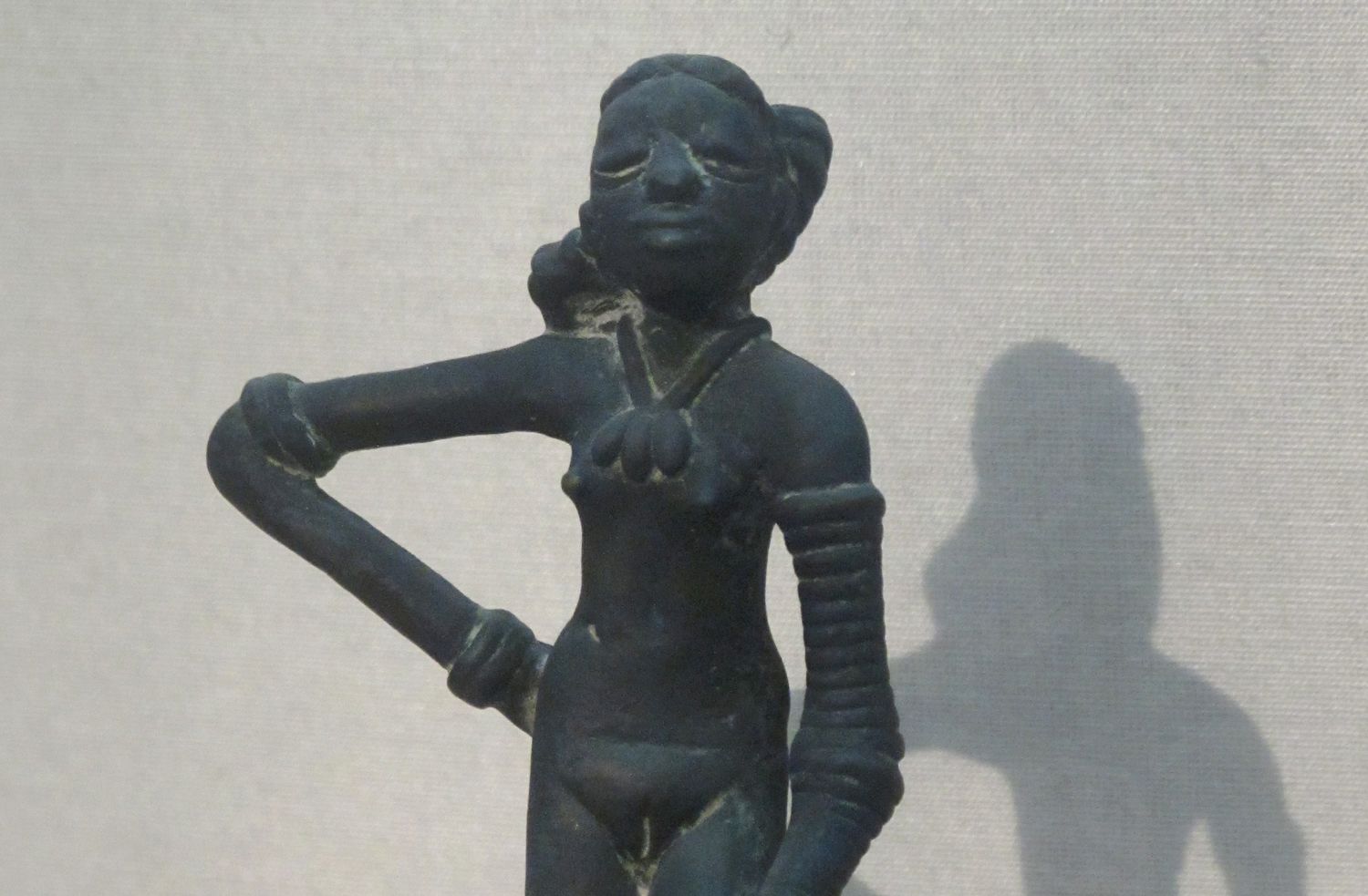
The National Council of Educational Research and Training (NCERT) has decided to replace the modified image of the famous “Dancing Girl” figurine of Mohenjo-daro in its Class 9 Arts textbook with the original version following criticism from academics and historians.
The controversy emerged after the bronze artefact from the Indus Valley Civilisation was depicted with its bare torso visually obscured in the newly introduced Class 9 Arts textbook, Madhurima. Critics argued that the altered image misrepresented one of India’s most iconic archaeological discoveries.
Confirming the change, NCERT Director Dinesh Saklani said the original image would be restored in future editions. The decision follows widespread debate over whether the figurine’s original appearance was suitable for school textbooks.
Historian and scholar Michel Danino, who headed the textbook development committee for NCERT’s new Class 6 Social Science books, revealed that he had earlier been told the figurine was considered “not age-appropriate” for younger students. However, he said his team disagreed with that assessment and even consulted teachers, who reported no concerns regarding the sculpture’s inclusion.
Danino criticised the alteration, describing it as a misrepresentation of the original artefact. He argued that changing the image reflected an outdated perspective on artistic nudity and contradicted efforts to decolonise Indian education. Comparing the modification to historical attempts to alter classical artworks, he said such changes distort the authenticity of cultural heritage.
The Dancing Girl, discovered at Mohenjo-daro, is among the most recognisable artefacts of the Indus Valley Civilisation and dates back to around 2600 BCE. The figurine is celebrated for its distinctive posture, with one hand on the waist and a confident stance.
The debate has reignited discussions about the presentation of history, archaeology and art in educational materials, with many scholars emphasising the importance of depicting historical artefacts in their original form.
