

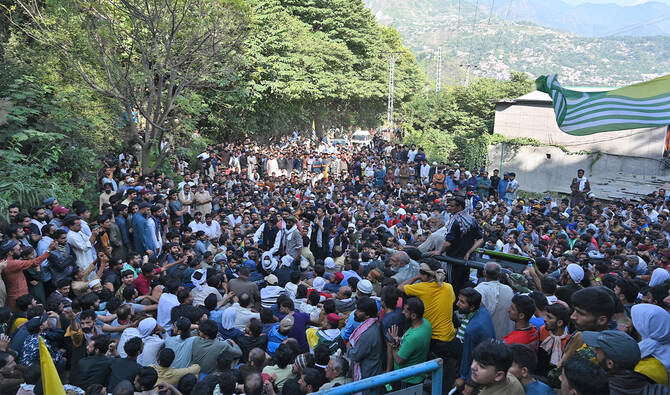
Political tensions have intensified in Pakistan-administered Azad Jammu and Kashmir (AJK) following violent clashes between security forces and supporters of the Joint Awami Action Committee (JAAC), an anti-government movement demanding political and economic reforms. The unrest comes just weeks before legislative elections scheduled for July 27.
According to reports, at least 20 people lost their lives during confrontations in several parts of the region, including Kotli, Rawalakot, and Mirpur. Among the deceased were security personnel, including police officers and a member of the paramilitary force. Authorities and protesters have exchanged blame for the violence, with each side accusing the other of escalating tensions.
The JAAC has been leading a campaign against what it describes as political interference in the region’s governance. One of its primary demands is the abolition of 12 legislative assembly seats reserved for refugees from Indian-administered Kashmir residing in Pakistan. The group argues that these seats enable Pakistan’s mainstream political parties to exert significant influence over government formation in AJK.
The movement faced a legal setback after the region’s Supreme Court ruled that the reserved seats are protected under the constitution and cannot be removed through administrative or executive action. Despite the ruling, JAAC supporters have continued their protests.
Amid the unrest, Pakistan’s Defence Minister Khawaja Asif called on protesters to demonstrate loyalty to the state and abide by constitutional principles. In a statement on social media, he emphasized that meaningful dialogue can only occur within the framework of obedience to the state and referred to constitutional provisions regarding citizens’ responsibilities.
Authorities had earlier declared the JAAC a banned organization under anti-terrorism laws, further increasing tensions between the movement and the government.
The developments highlight growing political challenges in the region as election preparations continue. Observers are closely monitoring the situation, with concerns that prolonged unrest could affect stability and the electoral process in Azad Jammu and Kashmir.
