

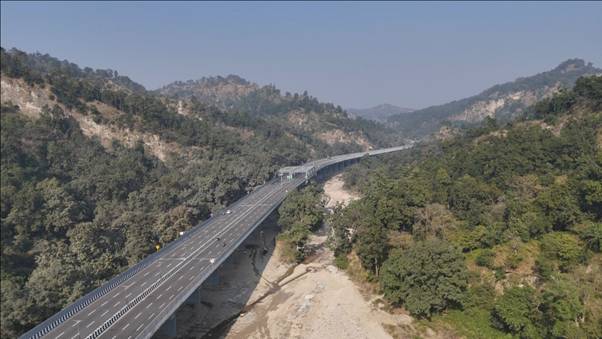
Over the past twelve years, India has witnessed a remarkable transformation in its road infrastructure under the leadership of Prime Minister Narendra Modi and Union Minister Nitin Gadkari. Through sustained investments and policy reforms, the Ministry of Road Transport and Highways (MoRTH) has significantly expanded connectivity, improved logistics efficiency, and strengthened economic growth.
A key pillar of this transformation is the Bharatmala Pariyojana, launched in 2017 to enhance freight and passenger movement through the development of 34,800 km of National Highway corridors. By March 2026, projects covering 26,425 km had been awarded, while 22,590 km had been completed, improving connectivity across economic, border, coastal, and port regions.
India’s National Highway network has expanded from about 91,287 km in 2014 to over 1,46,572 km in FY 2025-26, marking a nearly 61% increase. Simultaneously, highway construction speed has risen from 11.6 km per day in 2013-14 to nearly 34 km per day in 2025, reflecting enhanced project execution and infrastructure capacity.
Several landmark expressways have redefined connectivity across the country. The Delhi–Mumbai Expressway, India’s longest access-controlled expressway, is expected to significantly improve logistics and economic activity. The Delhi–Meerut Expressway, Dwarka Expressway, Bengaluru–Mysuru Expressway, and Delhi–Dehradun Economic Corridor have reduced travel time, eased congestion, and supported regional development. The Delhi–Dehradun corridor also showcases sustainable infrastructure through its elevated wildlife corridor and eco-sensitive design.
These achievements highlight the government’s commitment to infrastructure-led development. As India progresses towards the vision of Viksit Bharat, a modern, efficient, and resilient highway network will continue to drive economic growth, regional integration, and improved quality of life for millions of citizens.
