

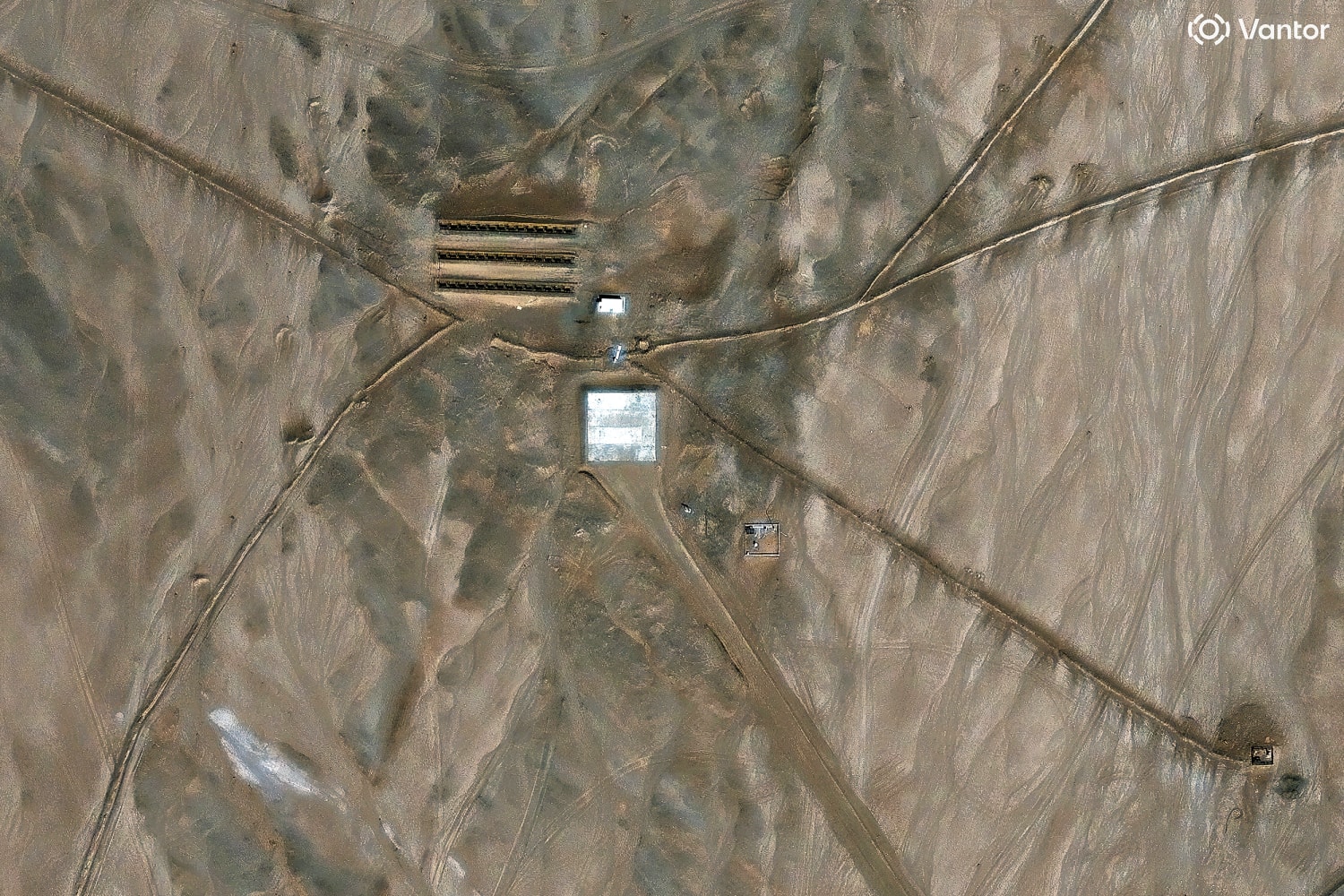
New satellite imagery has revealed the rapid expansion of military infrastructure around China’s nuclear missile facilities, highlighting Beijing’s efforts to strengthen the survivability of its strategic deterrent and ensure its ability to respond to any potential nuclear attack.
According to security analysts who reviewed the images, China is constructing an extensive network of launch pads, bunkers, communication facilities, and support infrastructure near its intercontinental ballistic missile (ICBM) silo fields in the remote deserts of Xinjiang and Gansu. The development is seen as a major enhancement of the country’s second-strike capability—the ability to retaliate after suffering a nuclear attack.
The imagery shows more than 80 launch pads that could potentially support mobile missile launchers, air-defense systems, electronic warfare operations, and command-and-control functions. Analysts also identified fortified bunkers, weapons storage areas, airfields, rail connections, satellite communication facilities, and large military vehicle deployments across the region.
At the center of the network are two large octagon-shaped military installations located southwest of the Hami missile silo fields. These facilities appear to serve as operational hubs connected to the silo complexes through an extensive network of roads and underground conduits. Experts believe the infrastructure may house communication systems, maintenance operations, and military command centers.
The expansion comes amid growing strategic competition between China and the United States, particularly over issues such as Taiwan. While China maintains a longstanding “no first use” nuclear policy, Western analysts have closely monitored Beijing’s modernization efforts due to concerns over transparency and the pace of its nuclear buildup.
The Pentagon estimates China could possess around 1,000 nuclear warheads by 2030 and continues to expand its missile capabilities and early-warning systems. Experts say the scale of the newly discovered infrastructure is unprecedented and reflects a significant investment in protecting and operating China’s land-based nuclear forces.
Analysts described the project as one of the most extensive nuclear-support networks observed in recent years.
