

(HT)
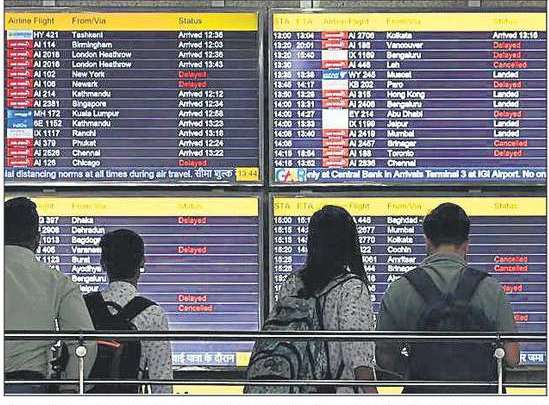
Passengers flying through Delhi’s Indira Gandhi International (IGI) airport could face significant inconvenience starting next month, with airport authorities deciding to cancel and reschedule about 100 flights daily during a crucial runway maintenance period.
Approximately 50 flights will be cancelled and another 50 rescheduled starting June 15 until mid-September, three officials aware of the matter told HT, detailing plans for when runway 28/10 will be shut to upgrade the Instrument Landing System (ILS) to CAT III B standards—instruments that help pilots land in low visibility conditions common during Delhi’s foggy winters.
The slashing of services comes after a similar attempt in April led to widespread chaos in flight schedules at the country’s busiest airport, forcing authorities to abandon the work.
An average of 721 arrivals and around an equal number of departures have been scheduled for the typical day during this period, one of the officials said. “After reviewing air traffic flow, aircraft rotations and operational dependencies, about 100 flights will need to be cancelled or shifted to off-peak hours,” the official cited above said.
A second official said during a meeting chaired by the Airports Authority of India (AAI) chairman Vipin Kumar on Wednesday, major airlines (Air India group, IndiGo, Akasa Air and SpiceJet) presented a revised flight schedule. “The new schedule is expected to be filed (with the ministry) in the next week,” the official added.
IndiGo and Air India, which have the largest number of services at IGI and therefore need to make most of the adjustments, did not respond to requests for a comment.
The April crisis exposed critical coordination gaps in India’s aviation ecosystem. Despite being informed in advance about the runway closure, airlines did not reduce their flight operations, triggering delays that cascaded throughout the country. The work, which began on April 8, was stopped and the runway reopened on May 5 after civil aviation minister Ram Mohan Naidu intervened following widespread passenger complaints and a parliamentary standing committee expressed concerns over the disruptions.
The decision to suspend the work and reopen the runway was made keeping in mind the peak travel season in April and May, officials said. The closure resulted in Delhi airport’s arrival capacity dropping from 46 flights per hour to around 36, with operations further affected when easterlies were in effect.
A third official said the June 15 to September window may be leaner. “It’s better to take a small hit now than face large-scale delays when the fog sets in. This is all about being better prepared for winter,” this official, with the aviation ministry, said, asking not to be named.
“Authorities have worked closely with airlines to ensure these adjustments have minimal impact on passengers,” the first official cited said. “Cancellations have been targeted on routes where airlines operate multiple daily flights and where demand is lower, so seat availability remains sufficient.”
“We will be in the non-peak summer period, which means flights are operating with lower load factors; around 70-75%, compared to 85% or more during peak travel times,” a ministry official said.
“Flights are mainly being rescheduled from peak to non-peak hours to stay within the airport’s limited capacity during critical periods,” an airline official requesting anonymity said. “Airlines are acting in coordination with airport operators and the civil aviation ministry to prevent major disruption later in the year (in the winter).”
The coordinated approach this time contrasts sharply with April, when airlines maintained full schedules despite advance notice of the runway closure.
Ministry officials said that the updated schedules expected to be filed by airlines next week will give passengers weeks’ notice to plan their travel accordingly—unlike April when passengers faced last-minute delays and cancellations.
